BLOG

Why Our Precision Machine Shop Loves Source Inspections
Many shops view source inspections as a necessary evil. Source inspections can indeed be cumbersome for shops whose processes are still mostly manual—there’s no denying that. Fortunately, at Focused on Machining, our robust ERP system allows us to facilitate source inspections easily. In fact, we’ve even come to really appreciate source inspections and the customers who require them.
Many shops view source inspections as a necessary evil. Source inspections can indeed be cumbersome for shops whose processes are still mostly manual—there’s no denying that.
Fortunately, at Focused on Machining, our robust ERP system allows us to facilitate source inspections easily. In fact, we’ve even come to really appreciate source inspections and the customers who require them.
The Role of Source Inspections in Defense and Aerospace Machining
Source inspections are a common requirement among large aerospace and defense companies like Lockheed Martin and United Launch Alliance that deal with mission-critical parts. When a shop completes a precision machining order, the company will send a quality representative to its facility to confirm that the parts meet all specifications before they are shipped.
The source inspector will review the parts’ documentation (e.g., material certifications, plating certifications, print, inspection results) and conduct their own quality control inspections or ask the shop to demonstrate how their quality control team inspected the parts.
The goal is to identify issues proactively and prevent the lengthy back-and-forth that can occur when those issues are identified after the parts reach the customer. At Focused on Machining, we view this benefit as a win-win for shops and customers alike. While source inspections slow the process down initially, we appreciate knowing that once a source inspector has signed off on a job, those parts won’t return to us for additional work.
How Our ERP System Enables Easy Source Inspections
Documentation is an essential part of a source inspection—and that’s where many shops struggle.
For example, one of our customers requires that we upload our documentation to one website and use a different website to schedule a call. This company’s source inspector prefers to review the documentation virtually before coming for an on-site visit. We can then correct any issues so that by the time the source inspector arrives at our facility, chances are high that they’ll approve the parts that day.
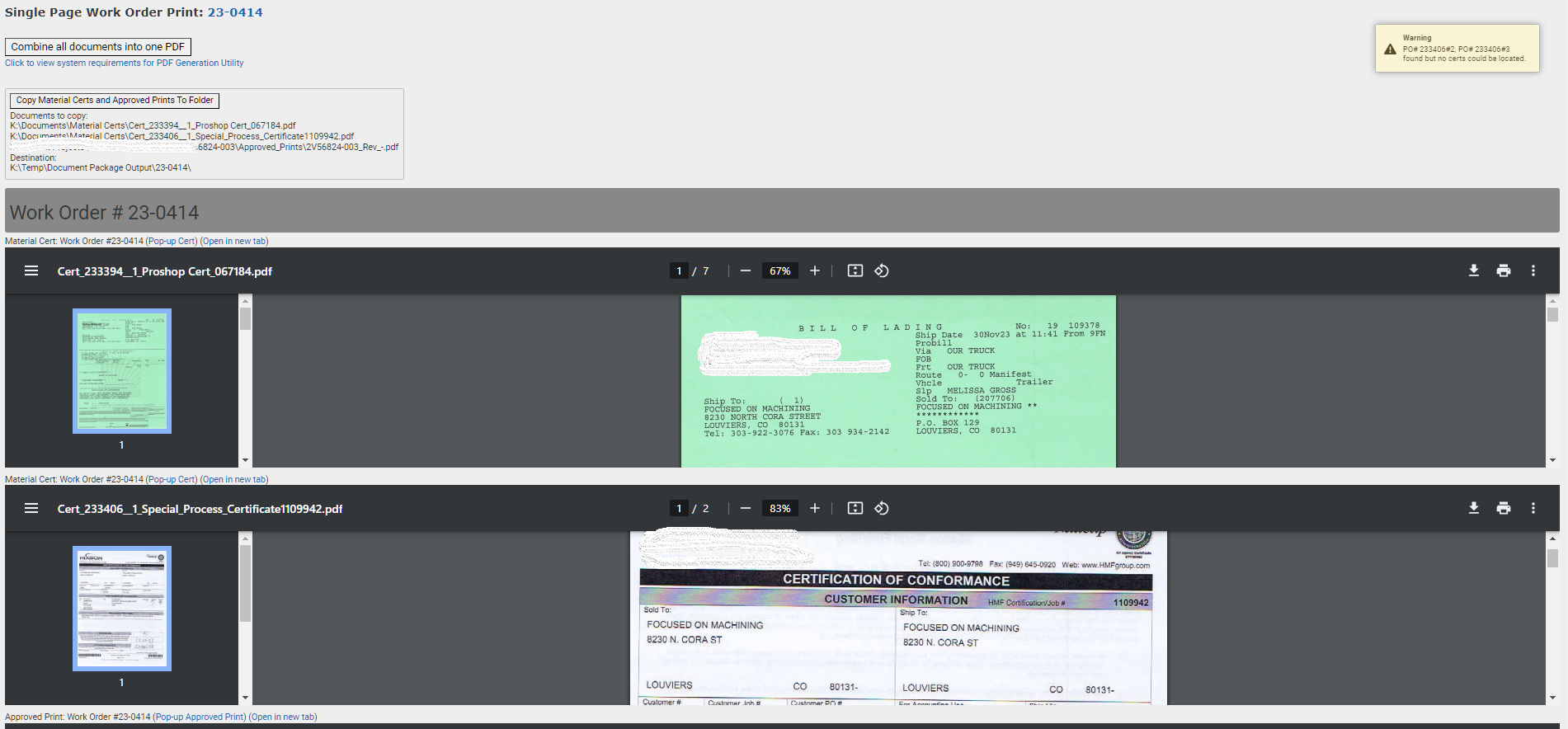
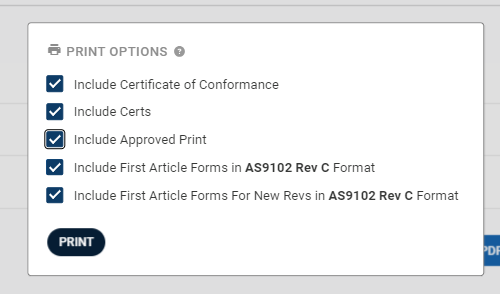
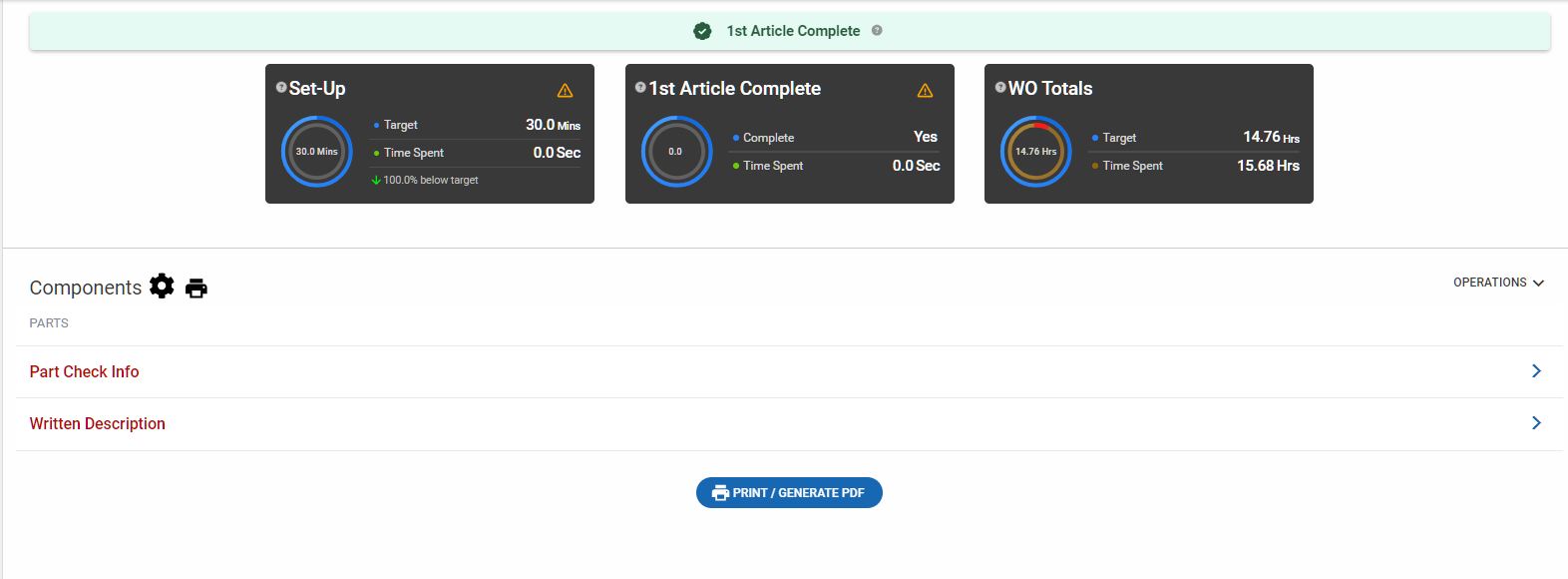
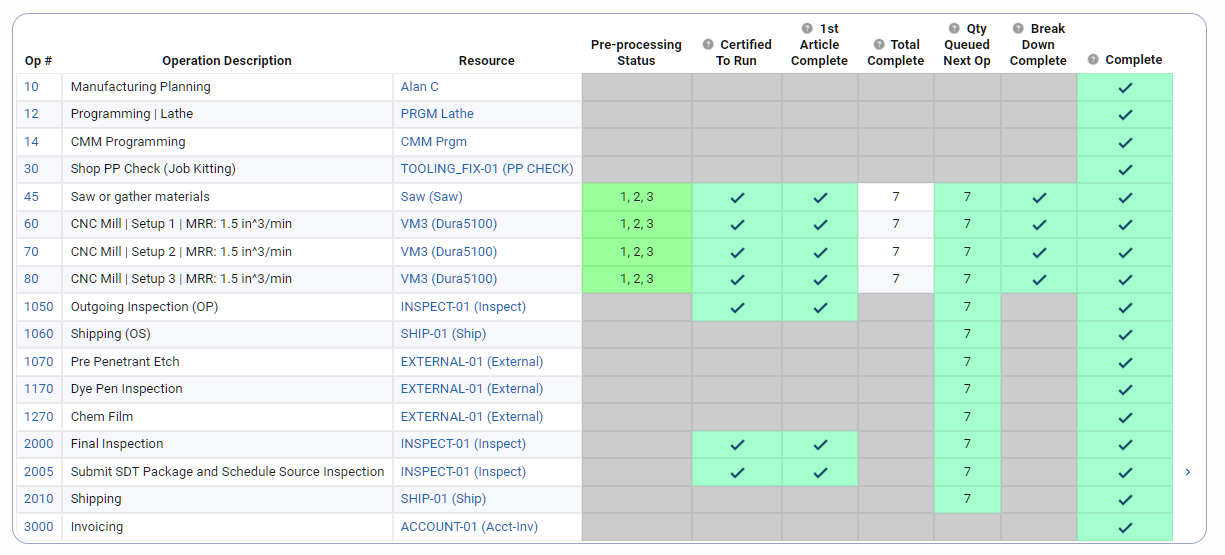
Understandably, shops with manual documentation processes can find it challenging and time-consuming to locate material certifications, plating certifications, prints, inspection results, and more and combine all that information in one neat package. But with our ERP system, this process is as easy as clicking a button. The system pulls the necessary information from different documents we’ve already uploaded and packages it together for us to save in a clearly labeled folder.
Source inspectors who have worked with our shop for defense and aerospace machining orders appreciate that they receive one file with all information organized in a sensible manner.
Want a Source Inspection? Let Us Know During Quoting
If you need a source inspection for your next defense or aerospace machining order, Focused on Machining is more than happy to accommodate you. We simply ask that you let us know during quoting so we can build a source inspection into our timeline and quote your lead time accurately.
Even if you don’t require an official source inspection, you’ll receive the same documentation package we deliver to companies that do. That’s because our commitment to providing stellar service extends to every customer we work with.
Request a quote for defense or aerospace machining services!

Could You Benefit from Contract Manufacturing Services?
Reducing the costs of machined parts can be as easy as having a conversation: always communicate with a shop about your purchasing intentions. If you plan to place a particular order on a recurring basis, the right contract manufacturing services partner can talk to you about opportunities to obtain the best costs over time with a long-term contract.
Reducing the costs of machined parts can be as easy as having a conversation: always communicate with a shop about your purchasing intentions.
If you plan to place a particular order on a recurring basis, the right contract manufacturing services partner can talk to you about opportunities to obtain the best costs over time with a long-term contract.
Here, we’ll review key considerations to get the most from contract manufacturing services and what to look for in a partner.
Considerations for Long-Term Manufacturing Contracts
Cost and delivery schedule
Costs vary depending on the buyer’s preferred delivery schedule. In the simplest terms, shops think about costs in three tiers:
Highest price = a low quantity of parts delivered immediately
Mid-range price = a high quantity of parts delivered in multiple shipments over a fixed period of time (e.g., quarterly)
Lowest price = a high quantity of parts delivered immediately
In other words, even if you can’t justify option #3, you can talk to your shop about option #2 and save money compared to option #1.
Potential for revisions
Some orders are a better fit for long-term contract manufacturing services agreements than others. An essential factor to consider before entering a contract is the potential for part revisions.
For example, suppose you agree to order 10 parts per month over six months with the understanding that the shop will machine all 60 parts at once and ship them from inventory. What happens if there is a revision change in that time? Who is liable for the parts that can’t be used: the shop or the customer? Most shops will clarify in their contracts that they can’t be held liable for engineering changes, leaving you to pay for parts you don’t actually need.
To avoid this risk, we recommend long-term contract manufacturing services for mature parts unlikely to undergo revisions.
But wait—if a part you plan to order on a recurring basis may undergo revisions, you still have options! In these situations, consider a blanket PO. When you submit a blanket PO to Focused on Machining, you agree to purchase X parts per month over Y months, but we won’t machine the parts all at once, giving you the opportunity to make minor revisions.
Blanket POs allow us to plan for the best (i.e., most cost-effective) path forward. For instance, we might design tooling and fixturing to improve efficiency or negotiate lower prices with material suppliers, leading to cost savings that we can pass on directly to you.
Assembly needs
Entering a long-term contract manufacturing services agreement is a perfect time to discuss your assembly needs. If we agree to deliver three unique parts in quantities of 10 every month, and those parts go together, talk to us about assembling the parts for you and shipping the complete assemblies.
What to Look for in a Contract Manufacturing Services Partner
As with any manufacturing engagement, vetting a shop before entering a contract manufacturing services agreement is important. Here’s what to look for in a partner:
Robust ERP system
A robust ERP system is essential to a shop delivering on its promises. At Focused on Machining, we schedule every job in our ERP system as soon as we receive a PO or enter a contract. When we tell you we can make X parts for you every month, it’s because we’re looking at our schedule and can confirm we have the machine capacity and resources to support that workload.
Regarding assembly work, our ERP system has excellent BOM capabilities to ensure we have every material, component, and more when we need it for even the most complex assemblies. That’s just one of the ways we maintain such a high on-time delivery rating.
In-depth contract review process
Big problems occur when shops don’t review contracts as thoroughly as they should. We’ve seen buyers burned by shops that take on contracts only to realize they can’t actually satisfy all the terms. The shops walk away from the contracts, and the buyers are left scrambling.
At Focused on Machining, we take the time to carefully review each contract to ensure we can deliver on all terms.
Superb inventory management
If you’re trusting a shop to hold inventory for you, you need assurance that their inventory management system is top-notch. The shop should be able to walk you through its approach to tracking and organizing inventory so you always know precisely what you’re getting.
One of the best ways to assess a shop’s inventory management capabilities, as well as other critical factors that make for a good contract manufacturing services partner, is to schedule a shop visit. Focused on Machining is happy to welcome you to our shop in person or via a virtual tour.
Contact us to discuss your contract manufacturing needs.

You Get What You Pay for in Manufacturing
You get what you pay for in manufacturing. Unfortunately, many buyers learn this lesson the hard way—something we’ve seen firsthand at our AS9100 machine shop. We’re happy to work with buyers now to get them the parts they need. But imagine the time, money, and stress they could have saved by having us machine their parts in the first place.
You get what you pay for in manufacturing. Unfortunately, many buyers learn this lesson the hard way—something we’ve seen firsthand at our AS9100 machine shop.
There has been a recent trend of buyers returning to Focused on Machining for parts we lost bids on months ago due to our “high” prices. The buyers selected cheaper shops but paid the ultimate price: poor quality, lost time, and costly rework. One is now six months behind schedule and under the gun to complete a critical project.
We’re happy to work with these buyers now to get them the parts they need. But imagine the time, money, and stress they could have saved by having us machine their parts in the first place.
The Importance of Vetting Suppliers
One potential reason for this trend is that buyers and suppliers aren’t arranging shop visits with the frequency they once did pre-COVID.
When visiting a precision machine shop, buyers have the opportunity to observe the shop’s systems, equipment, people, and processes. They get a good sense of what the shop can offer them, and the shop can instill confidence that they’ll get the job done right and on time.
Today, many initial conversations occur over the phone instead of in person, and buyers have less insight into what’s happening behind the scenes at a shop. Still, the right supplier should be not only willing but also happy to answer key questions to instill confidence in their work:
Does the shop have a robust ERP system?
Does the shop have a fully detailed scheduling module they can show you? (Trust us, not all scheduling modules are created equal.)
How does the shop arrive at their costs (i.e., what are their labor, quality, and overhead rates?)
What is the shop’s on-time delivery rate?
The Focused on Machining difference
In the case of our AS9100 machine shop, there is a lot going on behind the scenes as we quote jobs and prepare to make promises to customers in high-risk industries like aerospace, defense, and medical. These industries require (and deserve) the very best—and that’s what we deliver.
We develop fast, accurate quotes using Paperless Parts quoting software.
We look at our ERP system, scheduling module, and machines to assess open capacity and plan jobs.
We track material orders and calculate how long it will take for a part to undergo all necessary operations.
We follow strict processes with proven track records for success.
We’d be more than happy to walk you through our processes and give you a tour of our shop—either in person or virtually. Just let us know if that’s something you’re interested in!
Higher Costs = Higher Value
It’s true that our prices are often 15-20% higher than other suppliers—there’s no use denying it. But just as low prices come with hidden costs, higher prices promise hidden value. When you work with Focused on Machining, you’ll see that value in the form of the following:
On time delivery of your project
High quality, and a guarantee to correct any mistakes should they take place
AS9100 certification
Advanced software and processes, that enable us to achieve parts on time and at a high quality
Simply put, we have what it takes to get your parts done right the first time.
Tip: consider the total product cost
When you think holistically about your project and consider the total product cost instead of focusing too much on the price per piece, you’ll find that, in many cases, a higher price per piece yields a lower total product cost. Some of our customers learned that lesson the hard way, but you don’t have to.
The next time you need critical parts for a high-risk application, partner with an experienced AS9100 machine shop that will deliver the most value for your money. Request a quote from Focused on Machining.
The Importance of Investing in a High-Quality Prototype
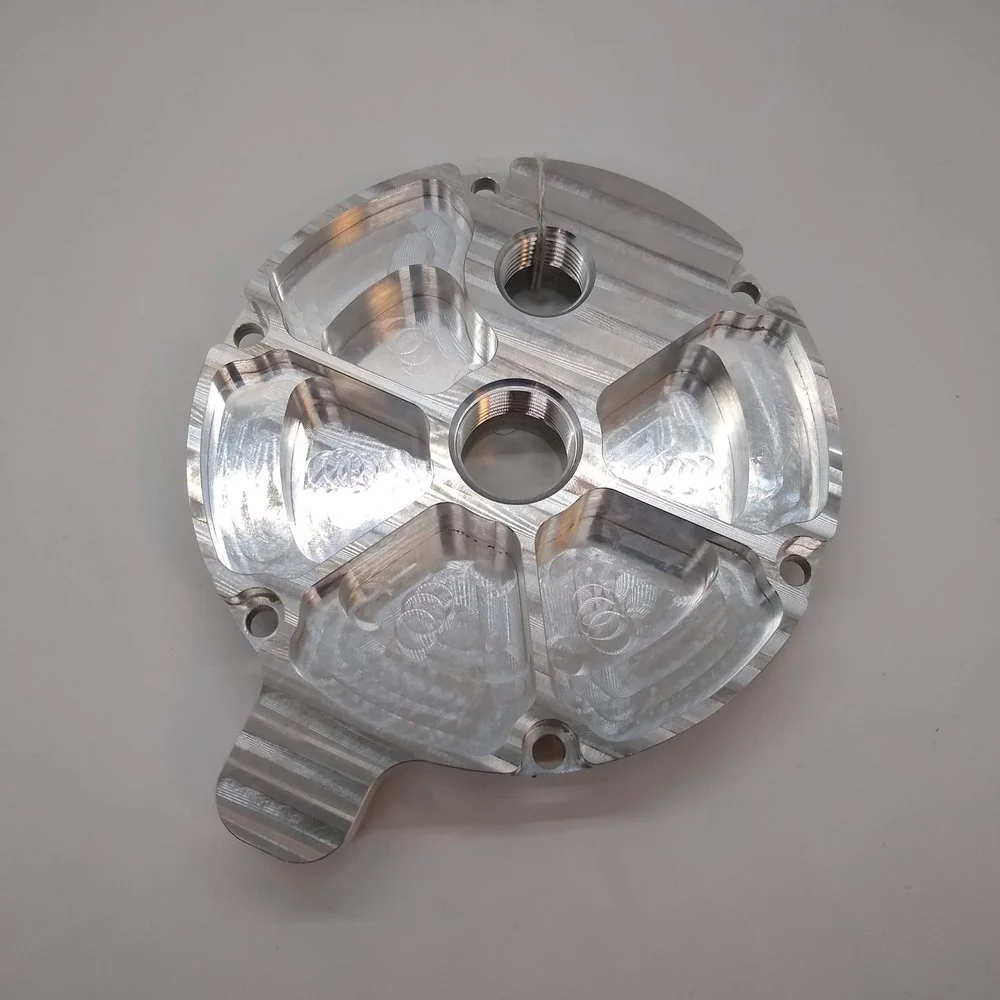
We see it all the time: A customer wants an inexpensive prototype delivered as soon as possible, so they order one from an online marketplace. Everything seems okay at first, but eventually, they find out the hard way that when you choose the cheapest option, you get what you paid for.
We see it all the time: A customer wants an inexpensive prototype delivered as soon as possible, so they order one from an online marketplace. Everything seems okay at first, but eventually, they find out the hard way that when you choose the cheapest option, you get what you paid for.
The first sign of problems typically occurs when the customer needs to assemble the prototype into a product, and it doesn’t fit right. Or when they’re ready to start production, and the prototype hasn’t been optimized for fast and cost-effective manufacturing at scale. In some cases, the customer may not notice issues until much further down the line when a product wears out quickly or doesn’t perform as well as it should—all because they chose a cheap prototype over a quality prototype to save a little bit of money up front.
We can tell you from experience that if you plan to bring a prototype to production, your best bet is to work with a contract manufacturing services partner you trust from the beginning. Even if you invest more money initially, you’ll save time and money in the long run. The key is to communicate openly with the shop about your plans for the prototype so they can approach the project holistically and help you achieve your long-term goals.
Prototype-to-Production Case Study
Still not convinced? This real-life example might change your thinking.
Struggling to achieve the right fit during prototyping
A sheet metal shop customer of ours was tasked with creating a camera housing for one of their end customers. The sheet metal shop fabricated most of the parts in-house, with the exception of six tight-tolerance parts that had to be machined.
The end customer outsourced the machined parts to a precision machine shop, but when it came time for the sheet metal shop to add them to the assembly, they didn’t fit. They knew the parts hadn’t been designed or machined properly—possibly both.
The sheet metal shop elected to take matters into its own hands, convincing the end customer to let them choose a vendor for the machined parts and manage the relationship. They reached out to Focused on Machining to create prototypes of the machined parts, which would eventually be produced in higher volumes. But they thought our prototype pricing was too high. So, they turned to a less expensive precision machine shop.
Though the precision machine shop did a fine job on the parts, the sheet metal shop decided they wanted a local contract manufacturing services partner to maintain better control of the process and slash lead times. That’s when they reached back out to Focused on Machining.
This time, the sheet metal shop customer was more open to spending money upfront to save money in the long run. They had proven the concept with the previous shop and knew that if we could achieve the required tolerances, the parts would fit together perfectly. This is where clear communication between the customer and us was crucial.
Communicating openly to align on long-term goals
The sheet metal shop customer wanted a small batch of 25 parts each to start. They shared their target price per part for high-volume production while acknowledging that the price per part would be higher for an order of 25. They asked us to quote the batch of 25 parts however we needed to, but made it clear that they expected us to hit a lower price point eventually.
We happily agreed to these terms.
Quoting the initial 25-part order higher than the customer’s target price per part allowed us to spend time building the proper fixturing, which was essential for achieving the parts’ tight tolerances quickly and accurately.
We then calculated the maximum amount of precision machining time that would allow us to hit our customer’s target price per part and determined how to stay within that parameter. Our next step was investing in high-quality tooling, which was expensive but would enable us to achieve better speed and precision.
Finally, we ran the 25 parts and delivered them to the customer. Their response? “You guys make really beautiful parts!” The machined parts fit into the assembly perfectly with no issues. The end customer was thrilled and put in an order for 100 parts per month, which the sheet metal shop will outsource to Focused on Machining.
Because we were given the flexibility to put in the extra work during prototyping to perfect our process, we can now hit our customer’s target price point for high-volume production without a problem.
The moral of the story is…
…if you’re developing a prototype that you plan to transition to production, tell us your goals from the start. Let us do the prototyping at a cost that makes sense (yes—a higher cost than an online parts marketplace), and we’ll ensure that you’re wildly successful during production. The extra money you invest upfront will pay off in the long run.
A Game-Changing Approach to Achieving CMMC 2.0 Compliance
Any manufacturer pursuing CMMC 2.0 compliance will tell you that the process is rigorous, to say the least. Focused on Machining is currently working to achieve Level 2 certification, which has a long list of 110 requirements aligned to NIST SP 800-171. We anticipate that our journey to CMMC certification will take us a total of 18 months when all is said and done.
Any manufacturer pursuing CMMC 2.0 compliance will tell you that the process is rigorous, to say the least. Focused on Machining is currently working to achieve Level 2 certification, which has a long list of 110 requirements aligned to NIST SP 800-171. We anticipate that our journey to CMMC certification will take us a total of 18 months when all is said and done.
As a quick refresher, the US Department of Defense (DoD) is mandating that all manufacturing suppliers acquire and maintain CMMC certification to prove they meet strict cybersecurity standards.
Understandably, not all shops have the time, money, or resources to complete such a rigorous process. CMMC 2.0 compliance consultants and IT professionals are available for support, but they charge well into the six figures. Rather than paying such a hefty price or attempting the process themselves, many small shops are opting out of CMMC 2.0 compliance entirely.
This means that by the time the requirement takes effect in 2024, the DoD is poised to lose a large number of suppliers. That’s an especially tough pill to swallow at a time when their supplier base is already shrinking for unrelated reasons, such as shop owners reaching retirement age and shutting down or consolidating.
Focused on Machining recognizes the challenges surrounding CMMC certification for DoD customers and suppliers alike. But we knew that opting out of CMMC 2.0 compliance simply wasn’t an option for our aerospace, space, and defense-focused shop. In fact, we wanted to get ahead of the game and become certified before the requirement even takes effect. So, we found a way to be part of the solution.
Using Our ERP System to Manage the CMMC Certification Process
Faced with the prospect of dedicating a year and a half to pursuing CMMC 2.0 compliance, we set out to determine how to manage such a complex process without hiring an expensive consultant or IT professional. From the beginning, our goal was to keep the associated costs as low as possible so we wouldn’t have to pass those costs on to customers through increased prices.
We thought, “Why not approach the process the same way we would a complex part?” Naturally, that idea led us to our ERP system, ProShop.
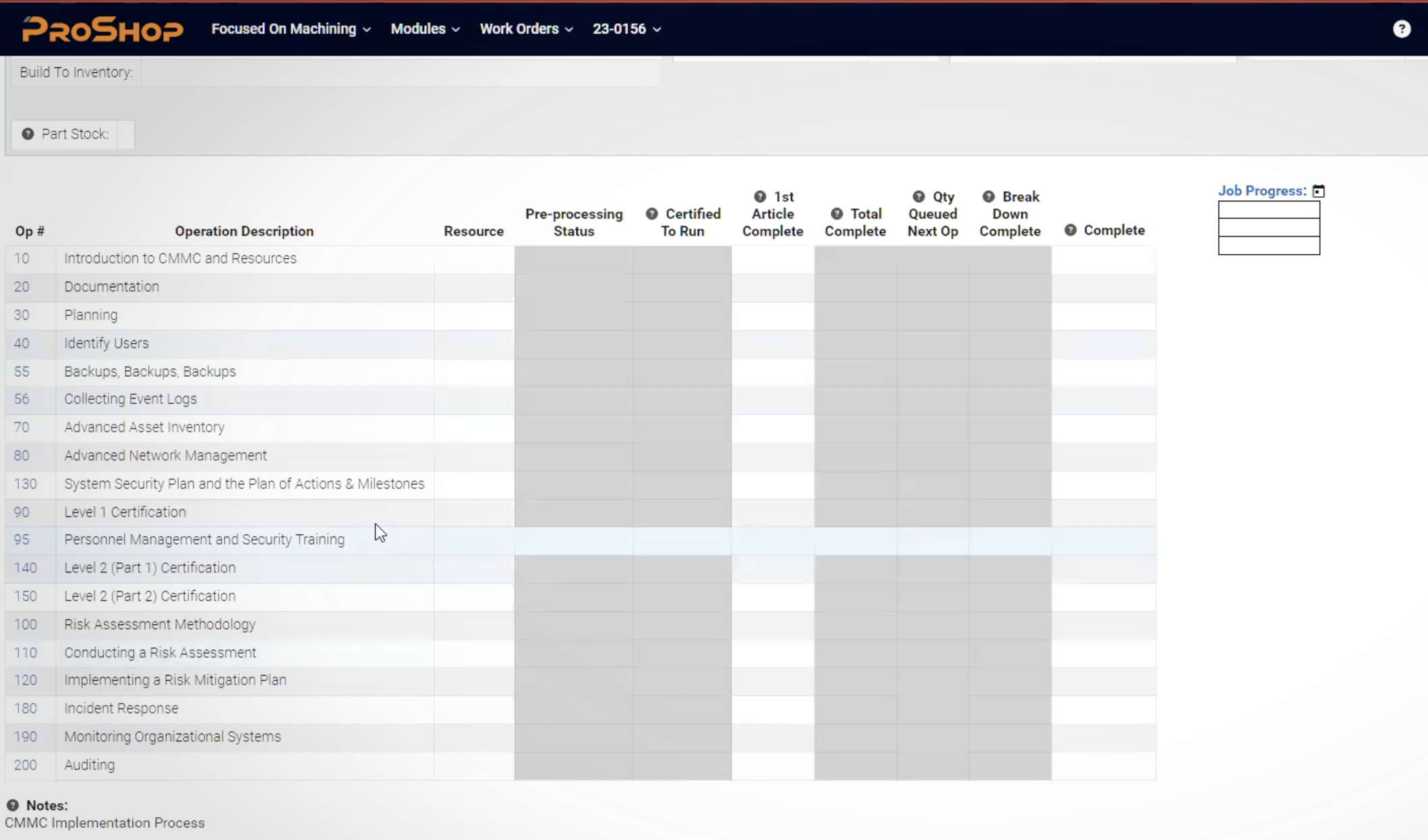
When making a part for a customer, we create a work order in ProShop outlining a long series of steps to complete the part. All related documentation is stored in the system for easy access. We check off each step as we complete it so everyone can view where we are in the process.
Here’s a look at the work order we created along with the ProShop team for CMMC 2.0 compliance:
When we click on each of these operations, a new page opens where we can view the steps that must be completed and who is responsible. The assigned team member completes the step and marks it as such.
During our eventual CMMC audit, we’ll be able to walk the auditor through the work order and show them proof of specific tasks and documentation. We took a similar approach when we went through the AS9100 certification process, and it was very successful.
A digital solution to benefit manufacturers everywhere
Ultimately, manufacturers everywhere will have the chance to benefit from our CMMC 2.0 compliance work order. Once we complete the process ourselves and optimize the work order to be as useful as possible, ProShop will release it as a module available for purchase.
We hope this offering will enable more shops to opt in to pursue CMMC 2.0 compliance. Because while those shops may be our competitors, we know they are a critical part of the American manufacturing industry that we love so much.
Are you looking for a machining partner ahead of the game in achieving CMMC certification? Request a quote from Focused on Machining!

Improving Precision and Efficiency with Multi-Axis Machining
As an aerospace machining shop committed to innovation and continuous improvement, it was only a matter of time before we progressed from standard CNC milling to multi-axis machining. Keep reading to learn how our multi-axis machining capabilities empower us to deliver unparalleled precision and efficiency, setting us apart from other shops offering contract manufacturing in Colorado.
As an aerospace machining shop committed to innovation and continuous improvement, it was only a matter of time before we progressed from standard CNC milling to multi-axis machining.
Keep reading to learn how our multi-axis machining capabilities empower us to deliver unparalleled precision and efficiency, setting us apart from other shops offering contract manufacturing in Colorado.
The Challenge: Machining Complex Parts with Tight Tolerances
We’ve developed a reputation for taking on challenging projects, so we’ve seen an influx of complex parts with features on all sides and tight tolerances. These two factors ultimately drove our decision to implement multi-axis machining at our aerospace machine shop.
Machining a complex part with features on all sides using a traditional vertical mill requires repositioning the part multiple times. This manual process is not only time-consuming but also increases the risk of error—especially when the part has tight tolerances or standard locational tolerances on different sides that demand perfect alignment.
If the machinist doesn’t locate the part absolutely perfectly from one setup to the next, there’s a good chance the part won’t meet the customer’s specifications.
The Solution: Multi-Axis Machining
Multi-axis machining enables us to reduce operations (i.e., human interference) to ensure accuracy, precision, and speed for the most complex parts. Parts that previously required 4-5 operations on a vertical machine are now achievable in 1-2 operations. Here’s how we do it…
The fourth rotational axis
With a bit of ingenuity, we transformed two of our vertical machines into 4-axis machines. Now, in addition to the standard X-axis (side to side), Y-axis (forward and back), and Z-axis (up and down), the integrated fourth rotary axis allows us to rotate a part to machine it from all sides without removing it from its fixturing.
Zero-point fixturing
A cornerstone of each multi-axis machine is the RockLock base, a permanent fixturing setup we invested in for each machine. The RockLock base allows for “easy movement of vises, fixtures, and tooling from machine to machine with no setup time,” enabling incredible precision. For example, we can machine all a part’s OD features, flip the part, and drill tight-tolerance holes on the end without ever having to adjust the fixturing.
How Customers Benefit from Our Multi-Axis Machining Capabilities
Customers seeking contract manufacturing in Colorado will benefit from our multi-axis machining services in the following ways:
Fast lead times. Due to the efficiency of multi-axis machining, we’ve significantly cut the time it takes for parts to move through our shop. In addition to the machining process itself being faster, parts require fewer quality checks since we’re completing multiple operations in one setup.
Incredible accuracy and precision. Reducing the number of setups minimizes the risk of human error that can occur when repositioning a part. As a result, we can achieve tight tolerances and complex features with unbeatable accuracy and precision.
Capacity for high-volume work. Another significant benefit of our increased efficiency is that we have the capacity to take on high-volume production orders and deliver them on time—no problem.
What’s Next at Our Aerospace Machine Shop?
We currently have two machines equipped for multi-axis machining, with a third hitting the shop floor very soon. In even more exciting news, we’re also preparing to welcome our first 5-axis machine, further enhancing our capabilities.
Implementing multi-axis and 5-axis machining is about more than just upgrading technology to us; it’s a commitment to our customers that we’re steadfast in our mission to deliver the highest-quality parts in the shortest time.
Need contract manufacturing in Colorado? Request a quote today, and let us put our advanced technology to work for your complex parts.