BLOG

Material Spotlight: 7000 Series Aluminum
At Focused on Machining, we bring years of expertise across a wide range of materials such as stainless steel, titanium, Monel and Inconel. Here, we’re focusing on our experience with 7000 series aluminum, a strong alloy that’s a popular material choice in a variety of industries.
At Focused on Machining, we bring years of expertise across a wide range of materials such as stainless steel, titanium, Monel and Inconel. Here, we’re focusing on our experience with 7000 series aluminum, a strong alloy that’s a popular material choice in a variety of industries.
An Overview of Aluminum 7000 Series
The 7000 series of aluminum alloys is among the strongest aluminum alloys available. It’s well known for its applications in aerospace and structural components. Because of our extensive experience in aerospace machining, we’ve grown very familiar with 7000 series aluminum.
7000 series aluminum has zinc as its primary alloying element, which differentiates it from 6000 series aluminum, another popular aluminum alloy that we often machine. The zinc content gives it high tensile strength properties, and its strength-to-weight ratio is one reason it’s so popular in applications like aircraft.
At Focused on Machining, we frequently work with several popular alloys from the 7000 series, with 7075 aluminum being the most common. This alloy is prized for its impressive strength-to-weight ratio, machinability, and the ability to further enhance its strength through heat treatment. We also regularly machine 7050 aluminum, another high-performance alloy in the 7000 series.
Among the drawbacks of 7075 is its limited corrosion resistance, which leads some engineers to choose 6000 series aluminum instead.
7000 Series Aluminum at Focused on Machining
We have been machining 7075 and 7050 for many years at our Colorado CNC machine shop, we sometimes feel like we’ve done it all with these alloys. Our customers see several benefits from our deep experience with 7000 series aluminum:
Speed: When a machine shop lacks experience with alloys like 7050, they often move cautiously, double-checking tooling and slowing down production. At Focused on Machining, we’re so confident in our expertise with 7075 and 7050 aluminum that we push our machines to their limits every time. This ensures that our customers receive their parts as quickly as possible without compromising on quality.
Price: We order so much of these materials that it’s unlikely any other shop can beat our pricing. We’re always getting the best prices from vendors because we have a long-term relationship with them and we’re ordering in such large quantities.
Processing: 7000 series aluminum often requires multiple post-processing steps and inspections. We have a trusted network of reliable aluminum processors who are experienced in working with these alloys. They are able to handle all of these processes under one roof, reducing lead time and minimizing the chances of any damage in shipping.
Knowledge: At certain times, there may be limited availability for a particular variety of 7000 series. For instance, maybe a customer asks for a large bracket in 7075 T6 six-inch plate, and we are not able to find it at that moment. However, we have the suppliers and the machining experience to find and machine it from T3 six inch plate or 7050 T6 six inch plate.
Talk to Us About Your Next 7000 Series Aluminum Project
At Focused on Machining, we’ve been making high-quality parts from 7000 series aluminum for years. We have the expertise to make what you need and the trusted partner network to get any post-processing steps done. And if you’re not sure if 7000 series aluminum is right for your project, we can offer some advice on selecting the right material for your CNC machined part.
Request a quote today to see how we can help with your next project.
How Quoting a “Family of Parts” Leads to Better Pricing
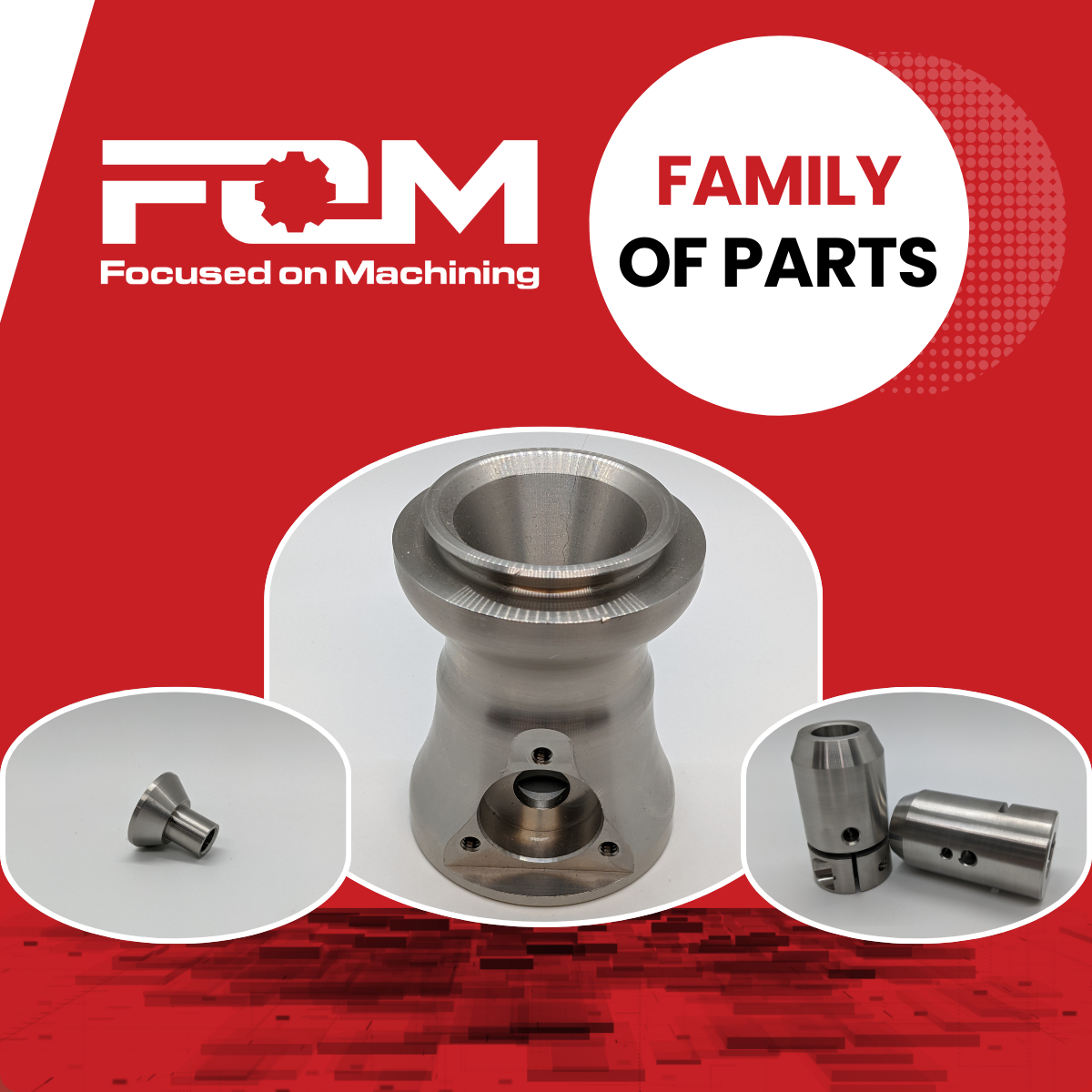
We’ve talked in the past about how long-term manufacturing contracts benefit customers in the right circumstances. And among long-term contracts, certain scenarios will offer even more savings. One of the most notable is working with us on a “family of parts,” a set of similar parts that we can machine at significantly reduced pricing.
We’ve talked in the past about how long-term manufacturing contracts benefit customers in the right circumstances. And among long-term contracts, certain scenarios will offer even more savings. One of the most notable is working with us on a “family of parts,” a set of similar parts that we can machine at significantly reduced pricing.
What Is a Family of Parts for a CNC Machine Shop?
A "family of parts" refers to a group of components that share common characteristics, such as material, size, features, and setup requirements. By standardizing these elements, we can optimize the machining process, reduce setup times, and minimize material waste. This approach not only increases efficiency but also enables us to pass on substantial cost savings to our customers.
When we are asked to quote a family of parts for a long-term contract, we can significantly improve on our standard pricing, because we can save on material and reduce setup time.
How to Identify a Family of Parts
For customers interested in this cost-saving strategy, it's essential to understand what qualifies as a family of parts. Here are the key factors:
Same Materials: Parts should be made from the same material, allowing for bulk purchasing and reduced costs.
Similar Size: Parts should have close dimensions to optimize material usage and machining efficiency. For example, if one part has a diameter of 0.75 inches and another is 1 inch, we can order material in a size that accommodates both.
Same Setup Fixtures: Using identical setup fixtures across parts significantly reduces setup time, speeding up the precision machining process.
Long-term Contract: Long-term commitments enable us to invest in fixtures and tooling, amortizing these costs over the contract's duration and further reducing expenses.
Quantity Requirements: The minimum quantity typically varies by project. We usually aim for at least 20 parts per quarter, with larger quantities yielding more substantial savings.
Cost Savings Through a Family of Parts
A recent project at our Colorado machine shop illustrates the benefits of this approach. A customer approached us with a three-year contract requiring the repeat delivery of approximately 60 parts per quarter. The initial request included 35 different part numbers made from various materials, including stainless steel, aluminum, carbon steel, and plastic.
By honing in on a family of parts as a subgroup, we knew we could offer drastically better pricing. We looked for parts of the same material that met the criteria laid out above and pared the order down to 21 parts. This subgroup allowed our team to find efficiencies and offer significantly reduced pricing, which the customer eagerly accepted. And because this was a long-term contract, we were able to take the time to create proper fixtures and optimize programming upfront.
However, it's essential to note that the quote was comprehensive. The improved pricing on a quote for a family of parts is an “all or nothing” proposition – we require customers to accept the entire quote rather than picking or choosing individual parts. The savings were contingent upon the entire order, enabling full implementation of cost-saving measures.
This example underscores the importance of providing detailed information when requesting a quote. The more context we have, the better we can optimize our processes and offer competitive pricing. Without detailed information, we might have quoted as if the parts were a one-time order, resulting in higher costs.
Talk to Us About Your Family of Parts
Partnering with Focused on Machining for a family of parts can lead to significant cost reductions. The potential savings often correlate with the complexity of the parts involved; the more complex the part, the greater the opportunity for cost savings.
If your next precision machining project includes a family of parts, we encourage you to reach out. Request a quote or contact us today to discuss how we can help you achieve better pricing and more efficient production. Our expertise and commitment to quality will ensure your project's success from prototype to production.

Focused on Machining Is a Service-Disabled Veteran-Owned Small Business
If you’re looking for manufacturing partners who can help you meet FAR requirements, I hope you’ll consider Focused on Machining for CNC machining services. We have a reputation for machining complex parts fast and at an incredibly high quality level
By Justin Quinn, President of Focused on Machining
If you’re a manufacturing buyer who does business with the US government, chances are you’re well-acquainted with FAR regulation 19.201. This regulation clarifies the government’s commitment to providing business opportunities to small businesses, veteran-owned small businesses, service-disabled veteran-owned small businesses, HUBZone small businesses, small disadvantaged businesses, and women-owned small businesses.
From my discussions with buyers, I understand that adhering to the highly specific regulations outlining the percentage of government work that must be contracted to businesses in the categories listed can be difficult. Yet the stakes couldn’t be higher, as failure to comply could cost you your next government contract.
That’s why I want you to know that when you contract CNC machining services to Focused on Machining, you’ll be working with a certified Service-Disabled Veteran-Owned Small Business (SDVOSB).
My Experience in the US Air Force


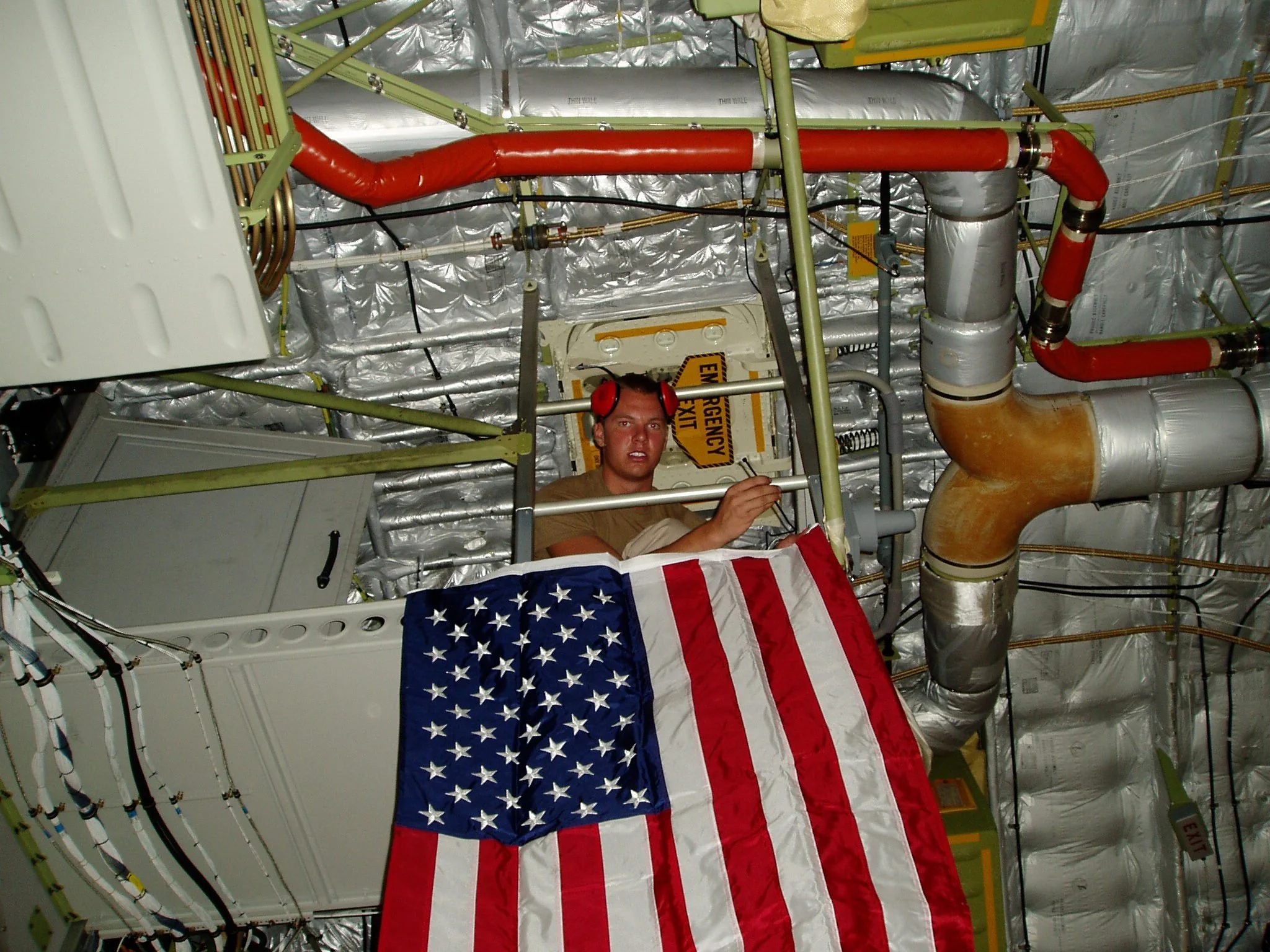


Many people don’t know this, but I served in the US Air Force for six years before purchasing Focused on Machining. I’m always happy to look back and reflect on that foundational experience.
I joined the Air Force right out of high school in 2002 and spent my first couple of years learning and becoming certified in aircraft systems—everything from engine to hydraulic to air conditioning—to serve as an aircraft mechanic on the C-17.
I then earned my flight status, allowing me to fly with the aircraft all around the world. For years, I lived out of a suitcase, traveling to locations like Afghanistan, Iraq, and Antarctica with a toolbox and a laptop to ensure the aircraft remained operational. It was an incredible way to spend that part of my life, and I’m very grateful for the experience.
Unfortunately, all that time spent in close proximity to jet engines led to cumulative hearing loss, which is how I earned my disabled veteran status. I maintain an up-to-date certification from the VA stating that I am a disabled veteran.
CNC Machining Services Certifications
I understand that many buyers who do business with the US government must outsource their manufacturing to shops that hold specific certifications. As a precision machine shop with a high percentage of aerospace and defense customers, Focused on Machining is committed to maintaining pertinent certifications and compliances.
ISO certification
ISO certification ensures that we maintain a quality management system conforming to a set of requirements defined by International Standards.
AS9100 certification
If you need an AS9100 machine shop for aerospace parts, you’ve come to the right place. Focused on Machining follows a strict set of quality management system requirements designed specifically for the high-stakes aerospace industry.
ITAR compliant
We use ITAR-compliant systems and processes to ensure adherence to US government regulations regarding the import and export of defense-related items.
CMMC compliant (in progress)
We are in the process of pursuing CMMC compliance and are on target to achieve Level 2 certification, which has a long list of 110 requirements aligned to NIST SP 800-171, by the end of 2024.
Work with Our Service-Disabled Veteran-Owned Small Business
If you’re looking for manufacturing partners who can help you meet FAR requirements, I hope you’ll consider Focused on Machining for CNC machining services. We have a reputation for machining complex parts fast and at an incredibly high quality level. Let us know what we can do for you.
How Customers Benefit from Our Lights-Out Manufacturing Capabilities
Focused on Machining offers lights-out machining as part of our CNC production machining services. These capabilities allow us to run orders around the clock so we can provide faster lead times, lower costs, and better flexibility.
Focused on Machining offers lights-out machining as part of our CNC production machining services. These capabilities allow us to run orders around the clock so we can provide faster lead times, lower costs, and better flexibility.
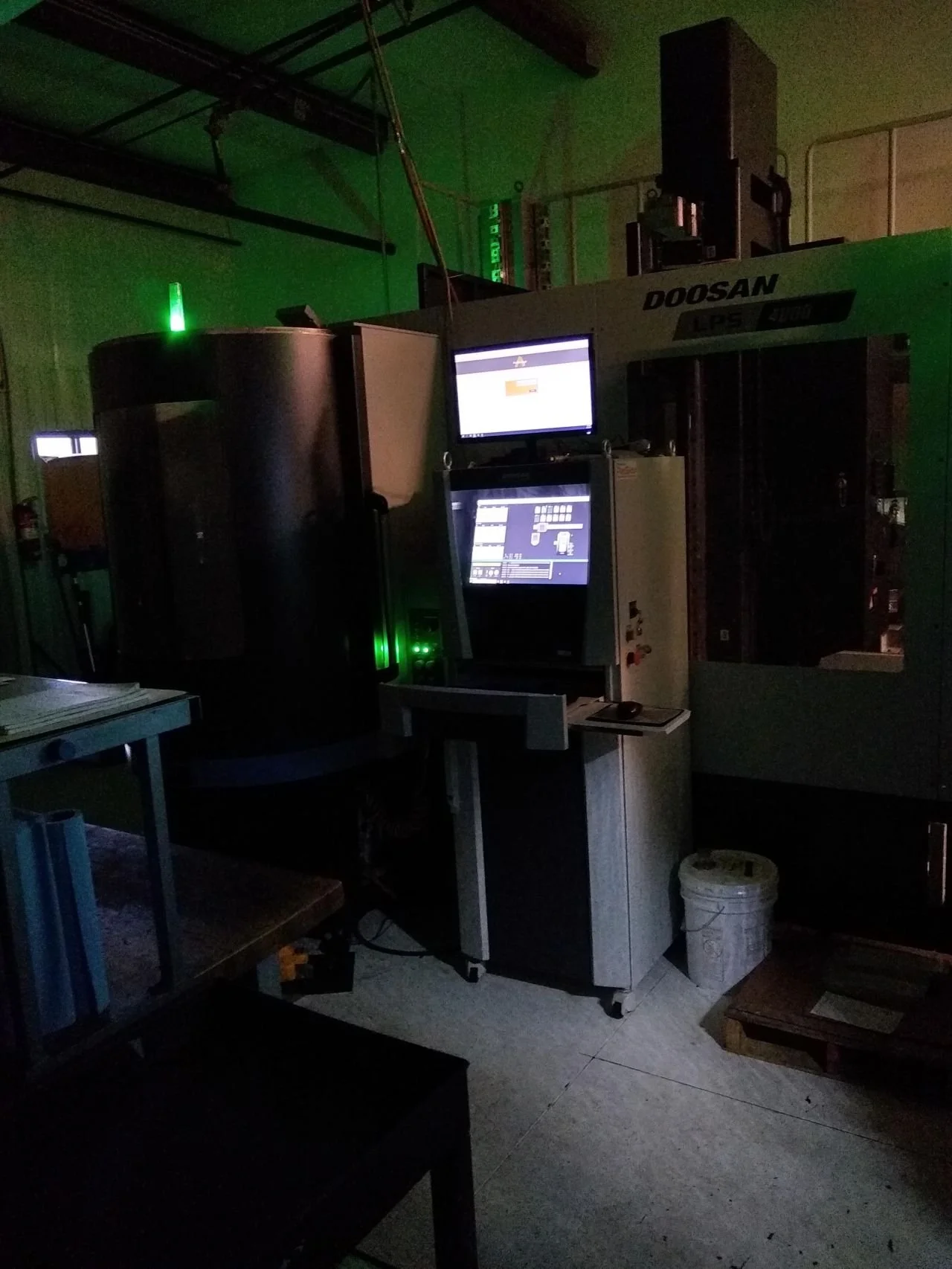
We currently have significant capacity on our DN Solutions NHP 4000, a horizontal lights-out machining center equipped with a 275-tool matrix and 12-station linear pallet system. Keep reading to find out how this machine benefits customers and if your part is a good candidate for it.
Benefits of Our Horizontal Lights-Out Machining Center
The NHP 4000 is essentially a horizontal machining center attached to a 12-pallet system. There are 12 tombstones in the pallet pool, and each tombstone has four sides, giving us 48 machining tables in just one machine. Once loaded and programmed, the NHP 4000 will run unattended until it runs out of work.
Here are the top three benefits customers can expect:
1. Cost-effectiveness
Labor factors significantly into the cost of machined parts. Generally, the more labor required, the higher the price. Because the NHP 4000 is highly automated, labor is only necessary during the initial programming and setup and when it’s time to change out a part and add raw stock. This benefit lets us keep our internal costs low and pass savings on to customers.
Ultimately, you get work done on one of the most advanced and expensive machines in our CNC production machining services department for a highly competitive rate.
2. Just-in-time inventory
The NHP 4000 is ideal for long-term contracts involving repeat parts machined and delivered at planned intervals over a fixed period of time. Once the parts have been programmed, we can run them with the click of a button, allowing us to machine them as close to the delivery date as possible without having to hold inventory on our shelves.
Have a revision change? Just let us know, and we’ll update the programming before your next delivery.
3. Flexibility
The ability to run parts with the click of a button gives us the flexibility to accommodate schedule changes and last-minute requests for repeat parts.
Need a short run of parts we’ve already programmed? We can get you what you need right away without charging you expedite fees.
Is Your Part Right for Our Horizontal Lights-Out Machining Center?

The NHP 4000 allows us to quote highly competitive prices for complex parts, but there are some caveats. Generally, parts should check these boxes:
High-volume or repeat. The initial programming and setup costs must be spread across a high enough volume of parts for the cost per part to be competitive. A good way to think of it is the longer the repeatability period, the higher the volume. For instance, if you only need one order annually, the volume should be in the hundreds; if you need monthly orders over an annual period, as few as five parts per month is tenable.
Moderately complex. Regarding part complexity, the sweet spot for this machine is a moderately complex part with numerous features and/or features on all sides that do not require 5-axis machining services.
Aluminum. Because aluminum is easy to cut and causes minimal tool wear, running aluminum parts unattended is relatively low risk. A harder material like stainless steel presents more opportunities for error.
If your part doesn’t check all these boxes, it’s still worth having a conversation to determine whether the NHP 4000 could be the right fit. As of June 2024, we have 8,000 hours of open machining capacity for it that we are eager to fill with your parts!
Details Matter When Machining Repeat Parts
When you order repeat parts from a CNC machine shop, you can’t be fully confident the parts will be consistent from one order to the next until you understand the shop’s approach to documentation. At Focused on Machining, we have a fully digitized solution that allows us to offer unbeatable consistency and efficiency when it comes to repeat orders. Like many of our other solutions to manufacturing challenges, it all ties back to our ERP system.
When you order repeat parts from a CNC machine shop, you can’t be fully confident the parts will be consistent from one order to the next until you understand the shop’s approach to documentation.
Is the shop using file folders to store physical copies of blueprints with hand-scribbled notes? That’s not exactly an ideal system. Scanning the blueprints into a digital database? That’s a slightly better way to do it, but even so, it’s not scalable.
At Focused on Machining, we have a fully digitized solution that allows us to offer unbeatable consistency and efficiency when it comes to repeat orders. Like many of our other solutions to manufacturing challenges, it all ties back to our ERP system.
Determining the Level of Detail Required
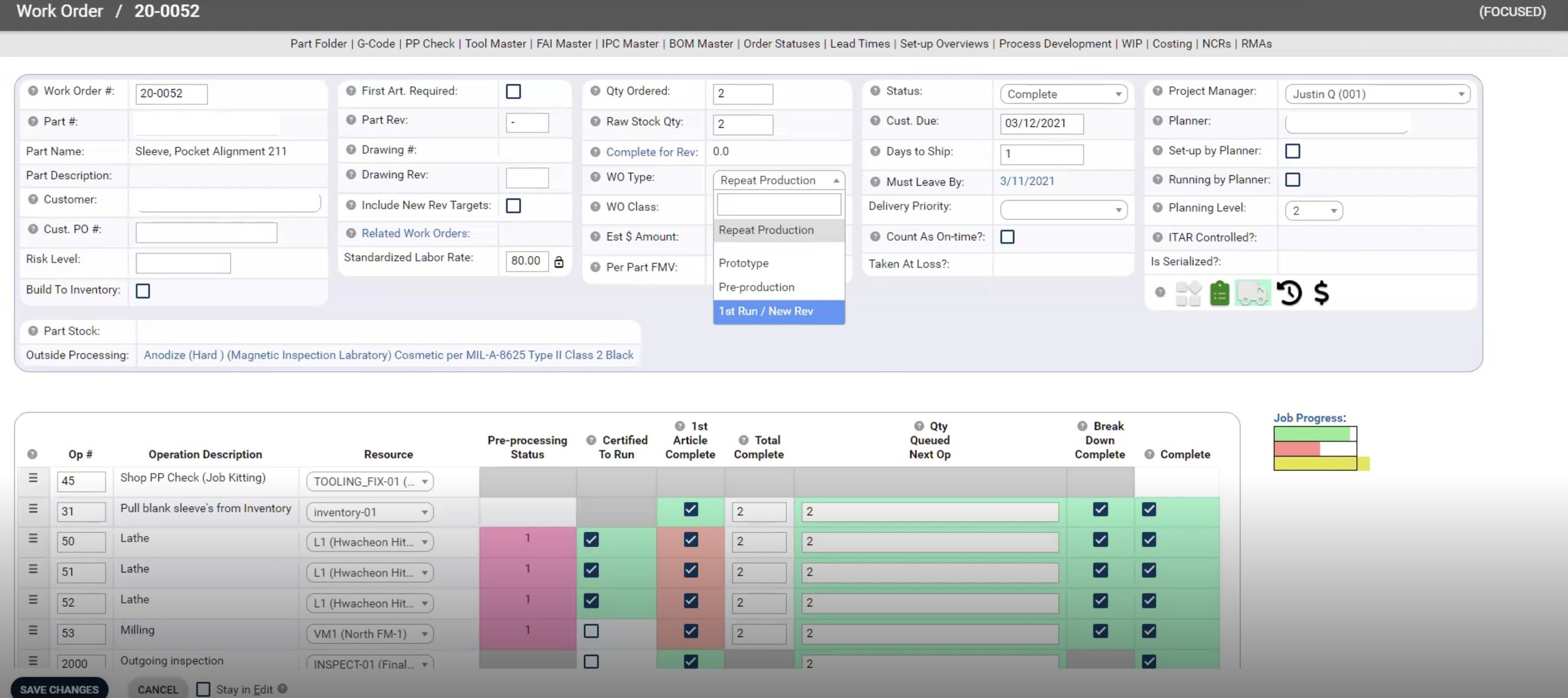
Any time our Colorado CNC machine shop receives a work order in our ProShop ERP system, one of our team members selects a work order type. The work order type helps us determine the level of detail required when documenting information about the part.
Prototypes require the lowest level of documentation because, in most cases, we’re making a single part to get out the door to the customer as quickly as possible. These parts typically don’t return to us, so minimal documentation is sufficient. (If we know we’ll be transitioning from prototype to production, we’ll document information in greater detail.)
Pre-production indicates that this is our first time making a part we know will become a repeat part, so a specific level of documentation is required.
1st run/new rev tells us it’s a part we’ve made before that has recently undergone a revision change. It suggests we should use as much of the existing documentation as possible and update any procedures that have changed.
Repeat production indicates we’ve made the part before, will make the part again, and should add images with clear descriptions outlining the process in detail.
Documenting the Machining Process for Repeat Parts
Regarding repeat parts, the goal is to provide highly detailed instructions so that any machinist has the necessary information to make an identical part.
The written description contains the most basic information and is often a one-line sentence. The run description contains images and instructions on how to set up the machine. As you can see, the level of detail is high.

Step 1: Set chuck pressure to 8KG/CM2
Step 2: Set tool 1 sticking out between 7.2 and 7.4 inches
Step 3: (Tool 1 in pocket 1) Make sure coolant flow hits each tool being used
Step 4: (Tools 4 & 5 in pockets 4 & 5)
… and so on until the last step.
The joke at our Colorado CNC machine shop is that the run description should be so detailed that even the owner of the company, who is NOT a machinist, could set up the machines.
Adding special notes
Our machinists often add special notes that are important for the next machinists to see. For instance, if they’re working on a part with a tight tolerance that must be hard anodized, they’ll note that the part must be machined to a specific tolerance pre-plating to account for anodize buildup.
Details Matter in Precision Machining
Using our ERP to document information not only allows us to deliver consistent parts with incredible efficiency but also reinforces to our team that details matter in precision machining. This mentality is a significant aspect of what sets our Colorado CNC machine shop apart.

How Our Precision Machine Shop’s ERP System Streamlines Complex Assemblies
Building complex assemblies requires more than having the right capabilities and expertise on the precision machine shop floor. It’s just as important to have the right software working behind the scenes to facilitate the process.
Building complex assemblies requires more than having the right capabilities and expertise on the precision machine shop floor. It’s just as important to have the right software working behind the scenes to facilitate the process.
We recently wrote about how our advanced digital quoting software allows us to quickly turn around detailed and accurate quotes for complex assemblies. Now, let’s shift the focus to how we streamline the manufacturing of complex assemblies once we have a job. The secret is our ERP system, ProShop.
Controlling and Managing the BOM
The key to executing complex assemblies is controlling and managing the bill of materials (BOM). You may recall that our quoting software breaks up the assembly into three categories: manufactured components, purchased components, and subassemblies. Our ERP system does the same thing.

The BOM pictured shows that items 1-7 are individual parts. Then, there are corner wheel, lockout plate, pin block, and pivot plate subassemblies. The system will take each subassembly and break it up into its own more granular BOM.
Determining Purchasing Requirements
The ERP system will help us determine our purchasing requirements using the information from the BOM. For each purchased component, it will tell us a) the quantity we have in stock, b) the quantity we have on order, and c) the quantity already allocated to different work orders to come up with the precise quantity we need to purchase.
Creating Work Orders
The system will then create work orders for each manufactured component and subassembly in the assembly. The work order pictured depicts an aluminum 6061-T6 plate that needs to be hard anodized. No hardware is required because we aren’t yet at that point in the assembly.
When we have completed all 42 of these parts, we provide a final inspection, ship them to inventory, and move on to the next work order.

Maintaining Material Certifications
As any aerospace manufacturer is well aware, maintaining material certifications is critical. It’s hard to imagine how difficult that would be for a complex assembly without our ERP system.
However, fortunately, with the click of a few buttons, we can generate a list of the material certifications for every piece in the assembly—whether purchased or machined components. Pictured is an excerpt of a list that is probably hundreds of pages long.
Staying Organized to Keep Lead Times Short
While entering the information for a complex assembly into our ERP system can take a few hours, the upfront investment of time is well worth the effort.
Manufacturing a complex assembly requires an extremely high level of organization. When precision machine shops are disorganized, the process doesn’t run smoothly, and lead times tend to be long as a result. Our ERP system helps us stay organized from beginning to end so that we can complete and deliver complex assemblies quickly.
If you’re looking for a precision machine shop that won’t no-quote your complex assembly, bring it to Focused on Machining. We’ve got the right systems in place to confidently take on your project. Request a quote today!