BLOG
The Value of GD&T Expertise in Machining Tight True Position Tolerances
True position is one of the most useful controls in GD&T, but it can also be a challenge for many machine shops. At Focused on Machining, we produce parts with demanding position requirements thanks to our deep understanding of GD&T and our experience with tight tolerance machining.
What a True Position Callout Actually Controls
A conventional size tolerance will usually apply to a single dimension, but a position tolerance controls the location of a feature relative to its theoretically exact position. That location is established by basic dimensions and, in some cases, a datum reference frame.
When a datum reference frame is used, even very small variations in the datum features, setups, and machined features can add up and cause a part to fall out of tolerance. This is why a position callout that appears comparable to an ordinary plus-or-minus tolerance may be far harder to achieve.
Part Example: Datum Relationships Add Complexity to a Waveguide
One recent example of our work with true position was a waveguide assembly we produced. The design had multiple pieces that fit together a bit like a clamshell, with an internal channel, passages, mating faces, and mounting interfaces that all had to align correctly.
The position of the channel was controlled relative to a three-datum reference frame. But with a positional tolerance of only 0.002 inches, there was almost no room for variation once the part was aligned to those datums. A small deviation in a referenced feature would have a significant effect.
The callout was critical to the part’s function, and we were ready to meet these requirements. But in creating designs, it’s helpful to understand why these tolerances can be challenging to machine and inspect.
Multi-Axis Machining Helps Preserve Feature Relationships
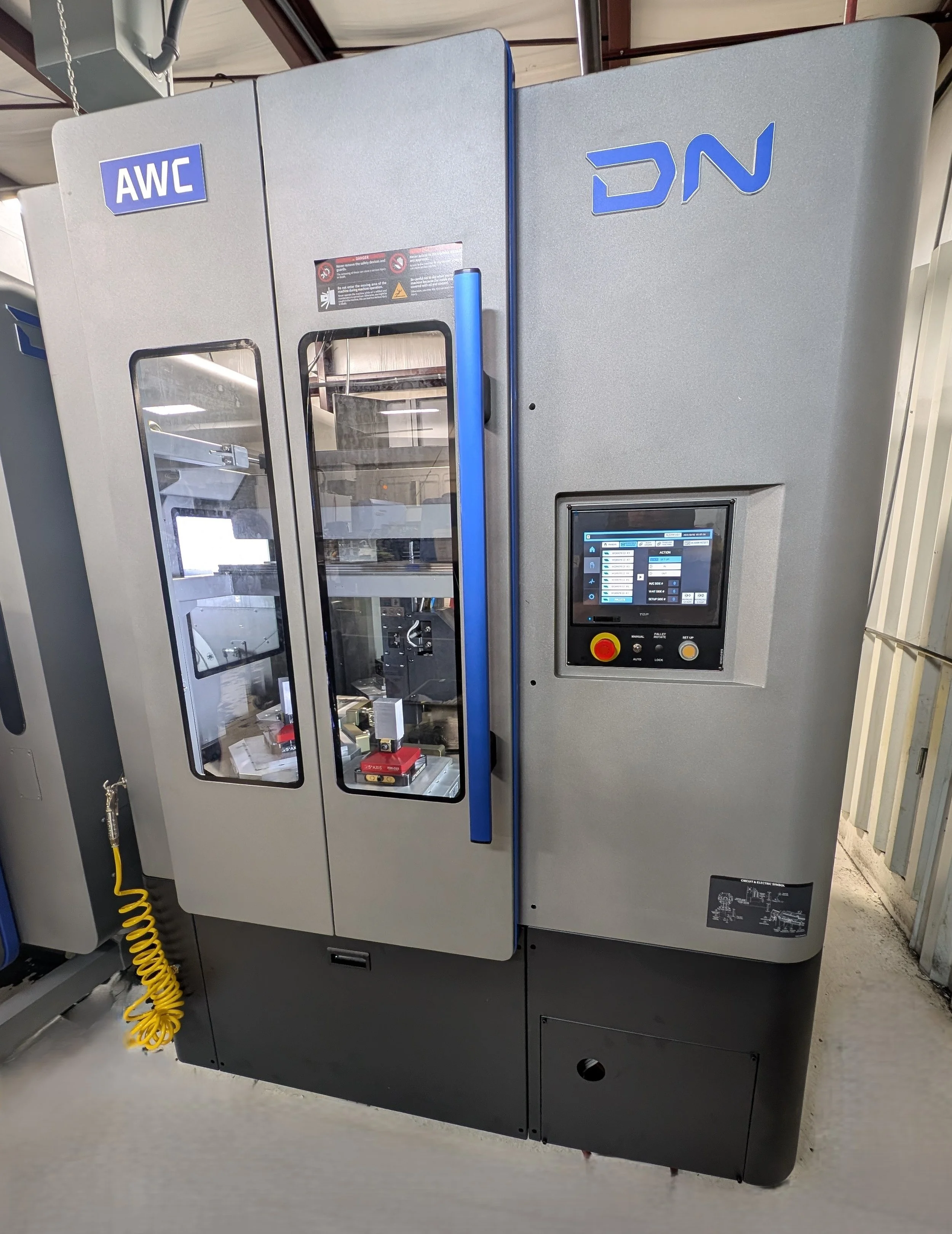
One of the best ways to handle true position is to machine as many features as possible in a single setup. At Focused on Machining, we use 5-axis machining and 4-axis horizontal machining to reach multiple sides of a component without having to remove it and reposition it.
Inspection is just as important. For parts with tight position callouts, we usually perform a comprehensive first-article-style inspection. If an adjustment is required, we’ll reinspect the entire part to confirm that the change didn’t create any new problems.
Our Recommendation: Specify Position Tolerances With Function In Mind
Tight position tolerances are appropriate when a part’s fit or performance requires them, but it’s important to be aware that challenging callouts do typically increase price by adding to programming, machining, and inspection.
It’s often helpful to review each callout in relation to the part’s functionality and consider whether a datum can be relaxed.
A Partner for Your GD&T Designs
Focused on Machining is ready to take on your designs with demanding true position requirements, and we can also help you identify opportunities to potentially simplify production. If you need a manufacturing partner experienced in GD&T, request a quote today.